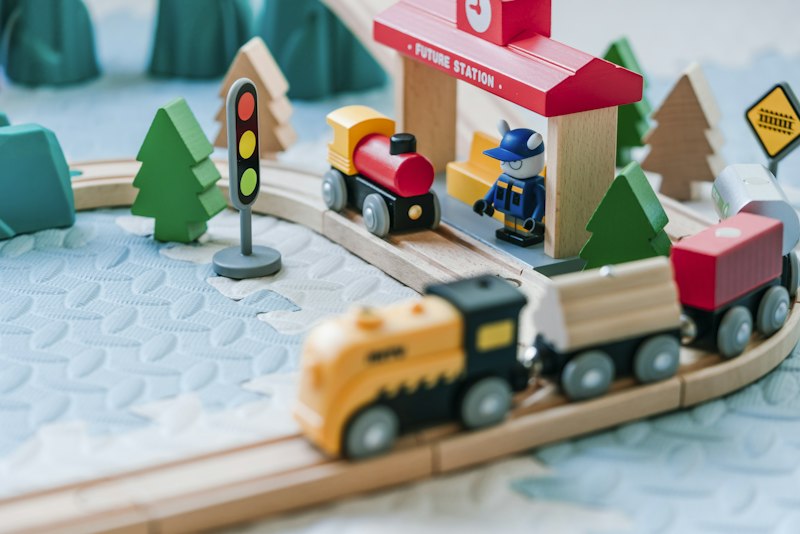
When you shop for toddler toys, it’s easy to get distracted by bright colors, blinking lights, and anything that makes a noise. But the best educational toys do more than entertain — they support language, motor skills, problem-solving, and imagination right when kids are growing fast. The trick is choosing toys that match your child’s current stage instead of buying for the next milestone too early.
This guide breaks toddler toys into three helpful age bands: 12-18 months, 18-24 months, and 2-3 years. For each stage, you’ll get a look at key developmental milestones, toy types that make sense, realistic price ranges, and a few safety tips to keep in mind. If you’re also thinking about a kid-friendly home setup, our guides to How to Baby-Proof Your Home: A Room-by-Room Guide and The Ultimate Baby Registry Checklist for First-Time Parents can help you round out the basics.
What makes a toy educational?
An educational toy doesn’t need to look academic. In fact, the best ones usually feel like play first. A good toddler toy gives children a chance to explore cause and effect, practice fine motor skills, build vocabulary, and experiment safely with new ideas.
Here’s a simple rule: if a toy encourages the child to do something — stack, sort, match, build, pretend, draw, shake, or solve — it’s usually a stronger educational pick than a toy that just lights up while the child watches.
12-18 months: stacking, sorting, and early discovery
At this age, many toddlers are pulling up, cruising, taking first steps, and learning how objects fit together. They’re also obsessed with repetition. If they can dump a bucket of blocks for the tenth time, they will. That’s not boredom; that’s learning.
Developmental milestones
- Improving balance and coordination
- Using hands to grasp, release, and place objects
- Beginning to understand simple words and routines
- Enjoying cause-and-effect play
Recommended toy types
- Stacking cups or rings: Great for size comparison and hand-eye coordination.
- Shape sorters: A classic for learning how objects fit.
- Large soft blocks: Safe, versatile, and surprisingly long-lasting.
- Push toys and activity walkers: Helpful for balance and movement.
Price range: About $10-$30 for most solid options, with higher-end wooden sets sometimes running a bit more. You do not need the fanciest version. Toddlers are perfectly happy with simple toys that invite repetition.
Safety tip: Keep toy parts large enough to avoid choking hazards. If it fits through a toilet paper tube, it’s too small for this age group.
18-24 months: pretend play and first puzzles
This is the age where imagination starts showing up in a big way. Toddlers might hand you an invisible cup of coffee, feed a stuffed animal, or insist that a box is actually a train. That’s a wonderful sign. Pretend play is blooming, and it’s one of the best ways to support language growth.
Developmental milestones
- More words and early two-word phrases
- Better problem-solving and memory
- Interest in role play and mimicry
- Improving attention span for short activities
Recommended toy types
- Simple pretend play sets: Toy food, a play kitchen accessory, a doctor kit, or a doll stroller.
- Chunky puzzles: Large knobs and fewer pieces make success more likely.
- Toy animals and figures: Great for storytelling and vocabulary.
- Musical toys: Xylophones, shakers, and drums encourage rhythm and listening skills.
Price range: Usually $12-$40. Keep an eye out for bundles, because a small set of figures or a few puzzle boards can cover a lot of playtime without taking over your house.
At this stage, you may notice your toddler uses toys in unexpected ways. That’s not a problem. The “wrong” way to play is often actually the most creative way. If a block becomes a phone, a rocket, and a sandwich, congratulations: you have a very engaged child.
2-3 years: building, art, and early creativity
By age 2 or 3, many toddlers are ready for richer play patterns. They can follow simple directions better, stack more pieces, and enjoy activities that let them create something of their own. This is a great time to introduce toys that feel a little more open-ended.
Developmental milestones
- Better language and storytelling
- Improved hand strength and fine motor control
- Growing interest in patterns, colors, and shapes
- Longer stretches of focused play
Recommended toy types
- Building blocks and magnetic tiles: Excellent for spatial thinking and creativity.
- Basic art supplies: Crayons, washable markers, dot stickers, and big paper.
- Instrument toys: Mini keyboards, tambourines, and kid-safe drums.
- Simple board games: Matching games or color games with very few rules.
Price range: Roughly $15-$60 depending on the material and brand. Magnetic tiles and wooden block sets can cost more, but they often last for years and work well across siblings.
Safety tip: Choose washable art products and store small accessories out of reach when not in use. Also, keep an eye on paint, glue, or small decorative bits that may come with craft kits.
How to choose the right toy without overspending
The smartest toy purchases are the ones your child will use again and again. A toy should be fun enough to invite repeated play, flexible enough to grow with your child, and sturdy enough to survive real toddler energy. That usually means fewer gimmicks and more open-ended play options.
Before you buy, ask yourself a few quick questions:
- Does this toy fit my child’s current skill level?
- Will it still be interesting next month?
- Can it be used in more than one way?
- Is it easy to clean and store?
If you’re building a whole family budget, it can help to save on basics elsewhere. Our article on How to Find Quality Clothes Without Breaking the Bank has practical tips that pair nicely with toy shopping.
What to skip
Not every toy earns a place in your home. In general, avoid items that do all the playing for the child, require constant batteries, or come with a mountain of tiny pieces that disappear in a week. Also be cautious with toys that are technically for toddlers but function more like screen time in disguise.
Parents often get the best value from toys that are simple, durable, and a little open-ended. If your toddler can stack it, sort it, count it, name it, or pretend with it, that toy is probably doing real developmental work.
Final thoughts
Educational toys don’t need to be expensive, fancy, or complicated. The best ones meet your child where they are and gently stretch what they can do next. Start with the developmental stage, choose toys that encourage active play, and let your toddler’s curiosity do the rest. If you keep those three things in mind, you’ll make much better buying decisions — and probably enjoy toy shopping a lot more too.